
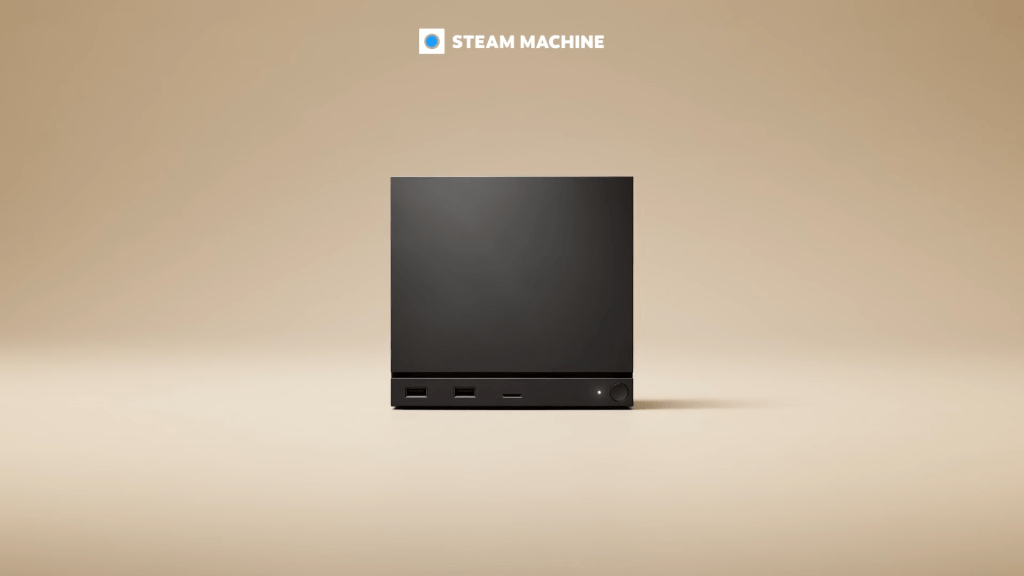
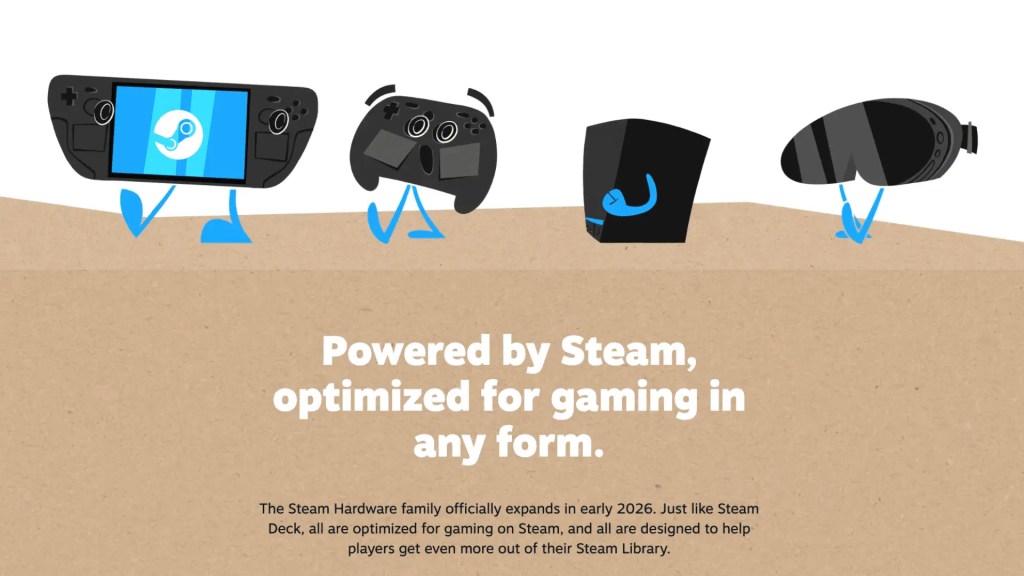
On the 12th November 2025, Valve announced a brand new line up of hardware: the second iteration of the Steam Controller and a brand new VR headset called Steam Frame that is fully wireless. The final announcement was the return of the Steam Machine – 10 years since the first generation released.
The gaming landscape in 2015 was very different compared to today, with games like Fortnite not even known to the wider gaming audience, except for a short trailer at E3 for its Save the World mode. The PS4 had proven itself as the biggest success of the eighth console generation, with the Xbox One falling at the release hurdle with Kinect and Always Online features being forced upon the consumer and the Wii U being the Wii U.
Steam had full control of the PC market, although EA and Ubisoft had made their own launchers to deal with the monopoly Valve had naturally occurred they would eventually return their games back to Steam. With Counter-Strike, Dota 2 and Team Fortress 2 bringing in a boatload of money every month, Valve took this time to experiment a bit – with a PC for the living room being the first test.
The First Steam Machine: Ambitious but misguided
The first Steam Machines released in November 2015, with models made in partnership with Desktop and Laptop companies Alienware, ZOTAC, Gigabyte, Origin PC and CyberPowerPC. However the price and power of these machines varied greatly with some starting at $500 and some potentially going up to $6000.
Stores such as Game and Gamestop were to have dedicated section for Valve and more specifically Steam, with the section stocked with Steam Machines and Controllers. This soon ended as just 7 months after release, the entire Steam Machine range would have sold less than 500,000 units world wide.
There were multiple factors that caused the Steam Machine to be dead on arrival. The most important factor was who the Steam Machine was for? PC Players had no need, as they had a device for PC gaming already or had the ability to upgrade any part of their build; something which was not capable in the Steam Machine. Those without a PC would be put off either by the price point; with consoles like the PS4 being $100 cheaper than the cheapest Steam Machine as well as Steam Machine having too many option’s for the average consumer to deep dive into.
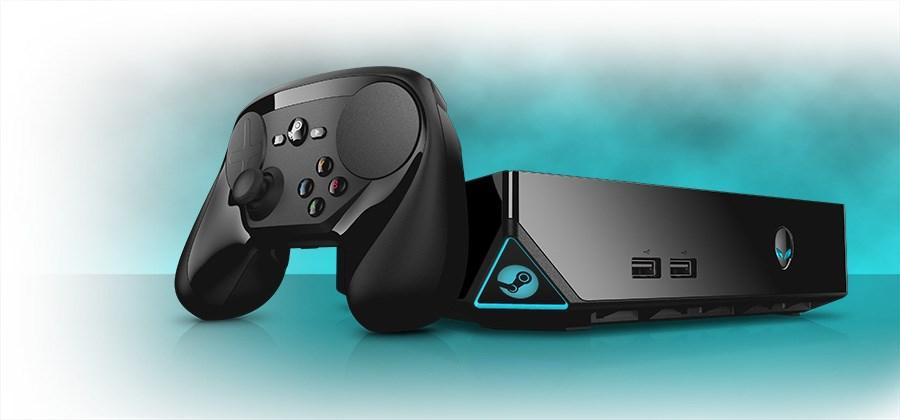
The biggest killer of the Steam Machine was it’s operating system. SteamOS at the time was clunky and not very user friendly, with some manufacturers avoiding the OS and going with the current Windows build at the time – with the SteamOS itself not even available at launch for any Steam Machine. The Steam Link, a device that allowed streaming from a PC to any monitor via an internet connection and HDMI was also a lot cheaper and better alternative for those with a PC already to move the PC into the living room.
SteamOS was a huge weak point for the Steam Machine, and something Valve continued to work on throughout the years with it being used on the Steam Deck and the device device being a strong argument for the SteamOS environment.
Steam Deck’s influence
When the Steam Deck released, immediate comparisons were made between it and the Nintendo Switch due to the fact both systems were portable with the option to be played in a docked mode. The Steam Deck was a resounding success, with an estimation of 6 million units sold. A huge selling point for the Steam Deck was the Steam Machine’s downfall – SteamOS had multiple huge upgrades, being built off of Linux and allowing owners to install Windows operating systems onto the device.
With the success of the Steam Deck and its comparison’s to the Switch, I was hoping that the Steam Deck would be to the wider FGC what the Switch was to the Smash Ultimate scene – a lightweight, easy to use, easy to setup piece of hardware that would be capable of helping TOs organise setups for events.
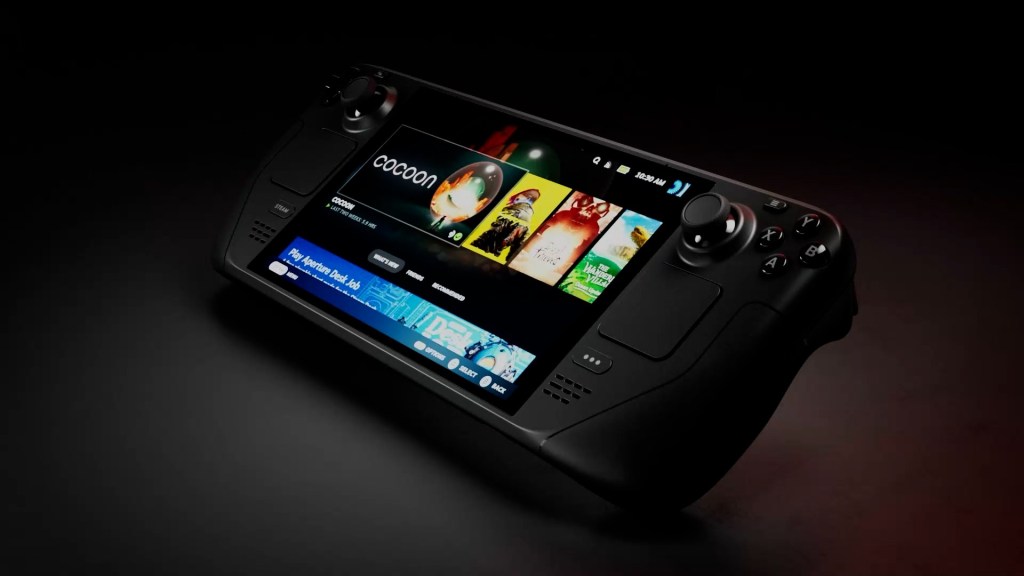
However the idea came crashing down. Whilst the Steam Deck was able to play Street Fighter 6 and Tekken 8 with little to no issues online or offline with one player, a match with 2 offline players would cause the game to have FPS and input problems, making it impossible to use the Steam Deck in a tournament environment.
Steam Machine’s Second Coming
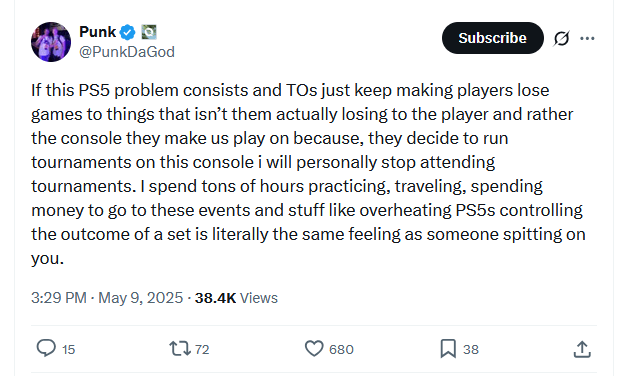
The announcement of the Steam Machine’s comeback came with multiple questions; some answered by Valve and some not and like myself many people had the same thought – will the Steam Machine be beneficial to the FGC? A big problem in the last year has been with the PS5 overheating at multiple events this including EVO Japan.
A huge upside of the Steam Machine right out the gate is the size and ports available on the console, with it being only slightly bigger than the GameCube with many referring to the Steam Machine as a GabeCube for comparison. The GabeCube also houses multiple USB ports with 2 being USB-2 and 2 being USB-3, as well as a USB-C port allowing for multiple controller inputs, as well has HDMI and DisplayPort ports.
Valve have stated that they want the console to play every game on Steam at 4K 60FPS with FSR upscaling. The main information for the benchmark tests came from playing Cyberpunk 2077 at 4K with FSR enabled. The Steam Machine was able to achieve it without many major frame drops, but there were many reports of it not being fluid with some preferring to keep the game at 1080p
Some fans have attempted to decipher what CPU and GPU the Steam Machine will use, with the specs given for both being made by AMD, but custom built for the device. The CPU is thought to be a custom AMD Ryzen 5 series with the GPU being from the Radeon RX series.
Valve has done multiple hardware surveys over the years, and the results of these have very much influenced the decision made with the specs of the GabeCube
Steam Machine and the FGC
Whilst it will be quite a few months before we can get our hands the GabeCube, we can still take this time to speculate how it can be beneficial to the FGC – more specifically how it can help with tournaments.
Based off the specs given for the device, almost every single fighting game title played at major and minor tournaments will be played on the Steam Machine at the recommended system requirements for every title. The only two title’s that may struggle with the Steam Machine would be the Super Smash Bros series as it would require emulation and 2XKO due to the anti cheat required to play the game not being compatible with SteamOS due it being built upon Linux.
The size of the device can also play a big role in how it can fit into a tournament environment. With it being compact and having a low-profile size, it could easily fit around any setup without the worry of it potentially falling or being knocked over compared to the large body of the PS5.
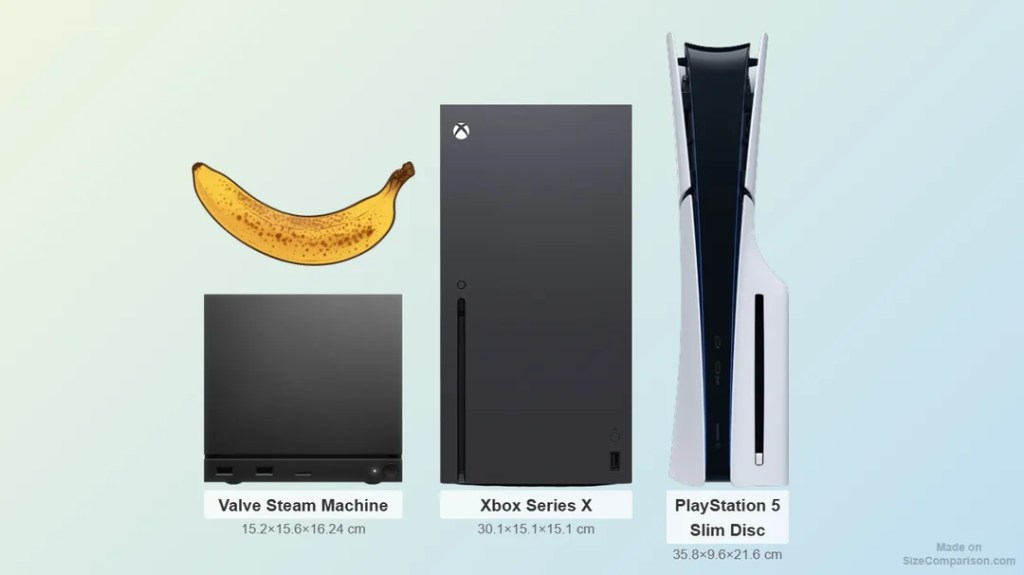
If Valve or potentially a third party offer a decent carrying case or storage for the GabeCube, there could be a slight chance that the device could be used similar to the Nintendo Switch, with attendees helping by providing setups for events to take place much easier. However, this would hinge on the final big question that has yet to be answered.
Price. An important factor that has yet to be revealed. With 2 different models available, one with 512GB of Memory and another with 2TB, the price point is is being very heavily discussed. Many are hoping that the price would be between £500 and £700, but with the reveal of wanting the device to be 4K60FPS enabled this price could potentially be double that.
The Steam Machine is currently wishlistable on Steam, as well as all other hardware recently revealed with the Steam Machine itself expected to release in sometime in 2026.
 FGNUK
FGNUK 
Leave a comment